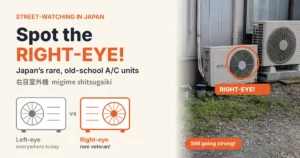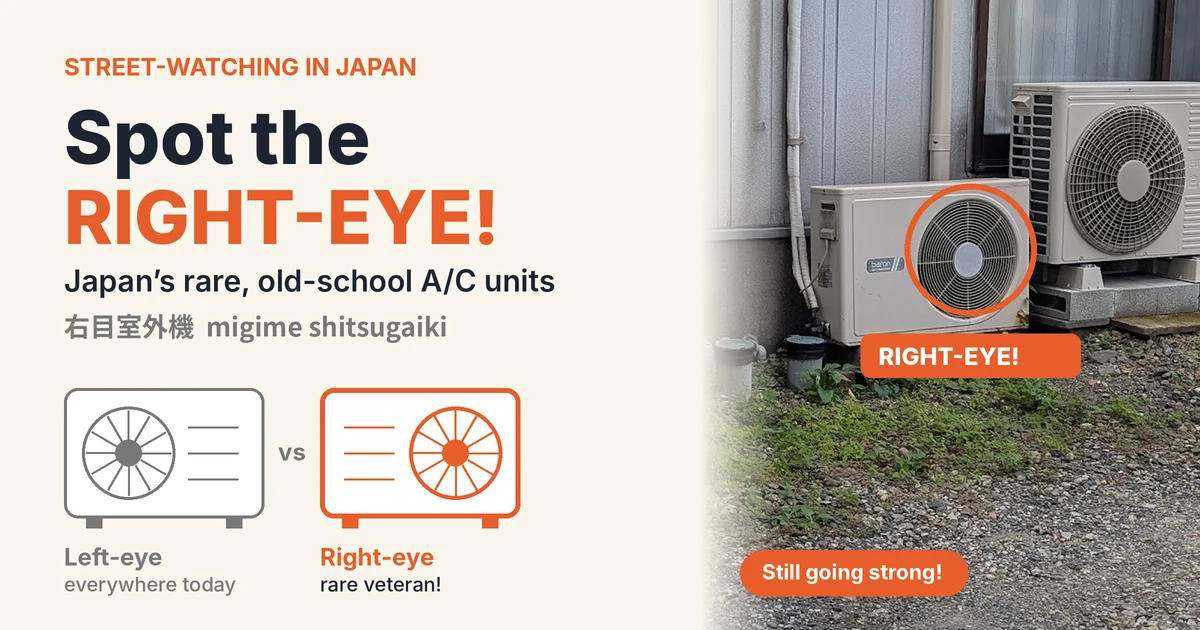
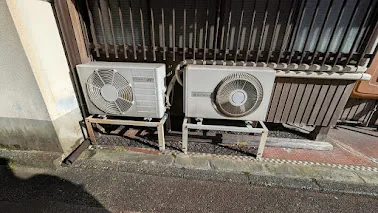
Walk down almost any back street in Japan and you’ll pass dozens of air-conditioner outdoor units. Most look the same: fan on the left. But every now and then, you’ll meet an old-timer with its big round fan on the right. Street-watching fans in Japan lovingly call these “right-eye” outdoor units (右目室外機, migime shitsugaiki).
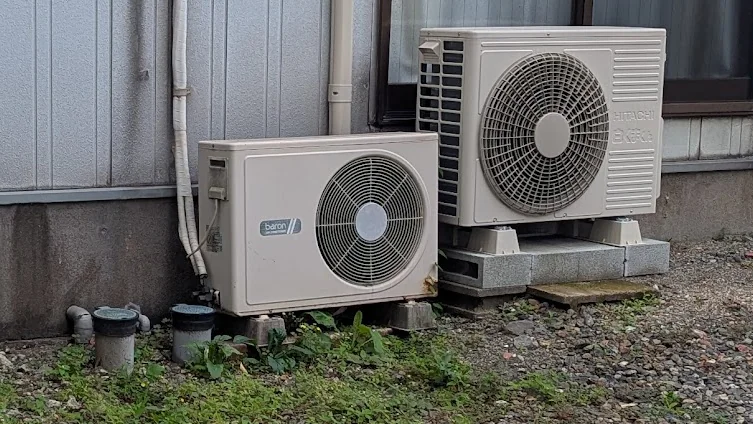
What’s a “right-eye” unit?
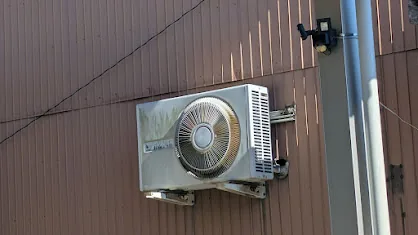
Simple: look at the outdoor unit like it’s a face. If the round fan “eye” sits on the right, it’s a right-eye unit! This style was common in Japan until around the 1980s. Today, almost all new units have the fan on the left, so the right-eyes are getting really rare.
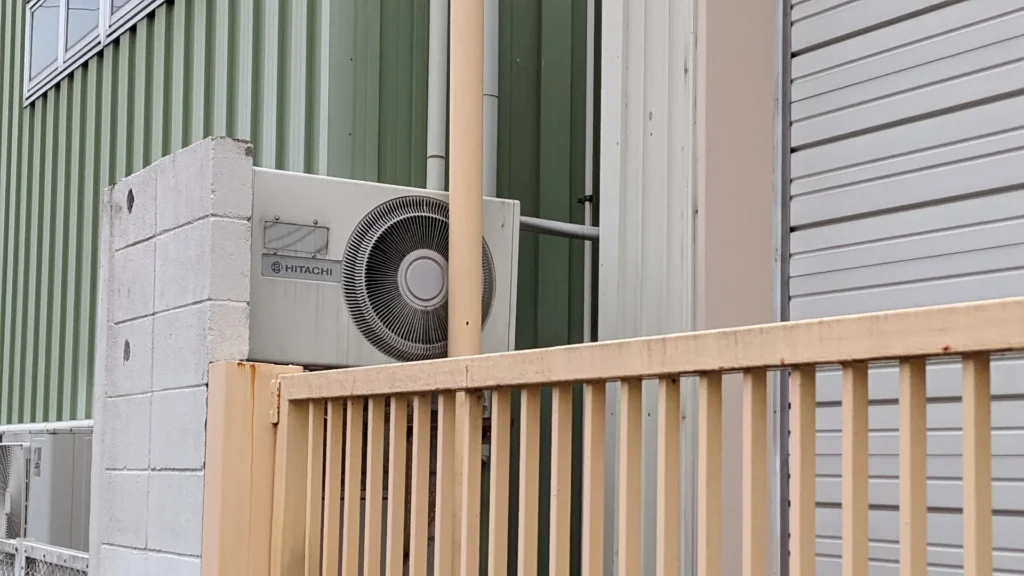
Still working after all these years!
Here’s the amazing part: many of them are still running. That means a machine built decades ago has survived countless hot summers and cold winters, and someone has kept taking good care of it. Rusty, faded, a little crooked… we think that’s pure respect-worthy “veteran” energy. When you find one humming away, give it a quiet nod!
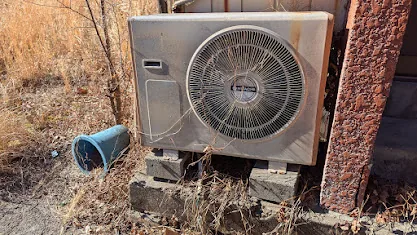
How to spot one
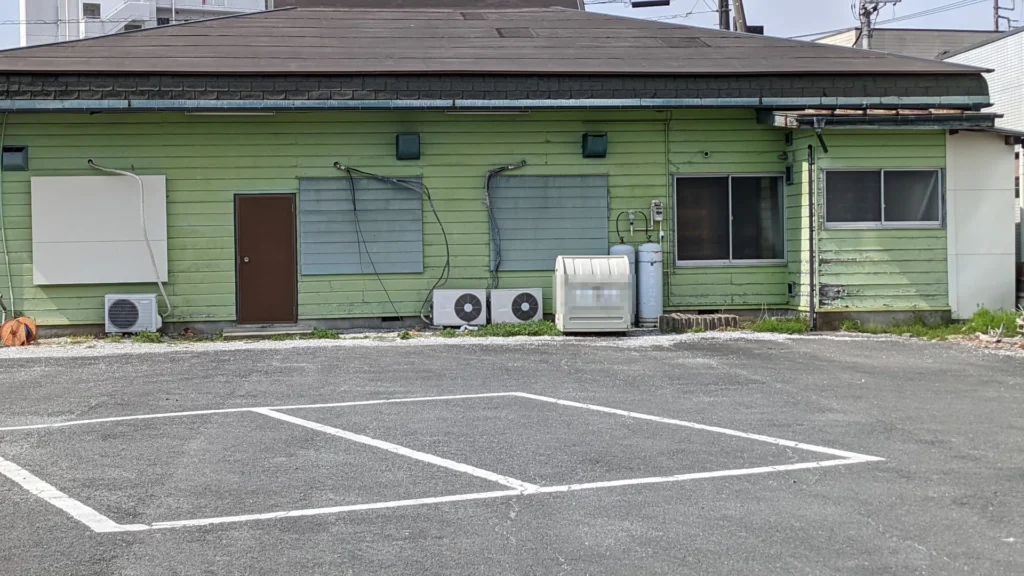
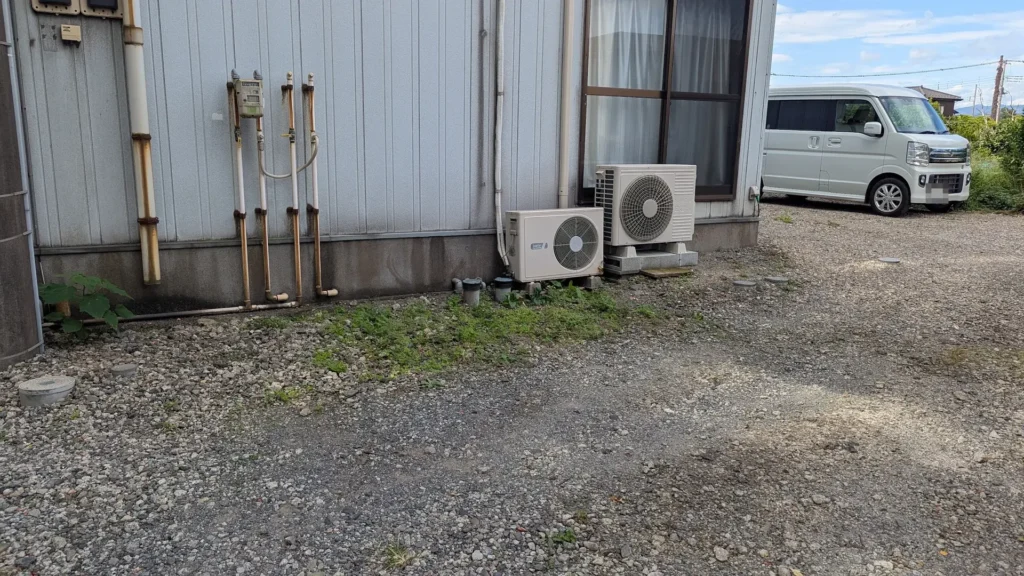
- Look along the back sides of small shops, old offices and little factories.
- Check the ground, the walls, and even up near the roof – some sit on metal shelves high on the wall.
- Look for old-style logos like HITACHI on the front panel.
- Bonus points if you find a right-eye and a modern “left-eye” unit side by side!
Street-watching manners (please read!)
All photos on this site were taken from public streets (or with the owner’s permission), and we don’t photograph private homes. Pointing a camera at someone’s house can make people uneasy (or even suspicious!), so please don’t aim your camera at private homes, and never step onto private property to get a closer shot. Enjoy from the street, quietly and politely.
More photos
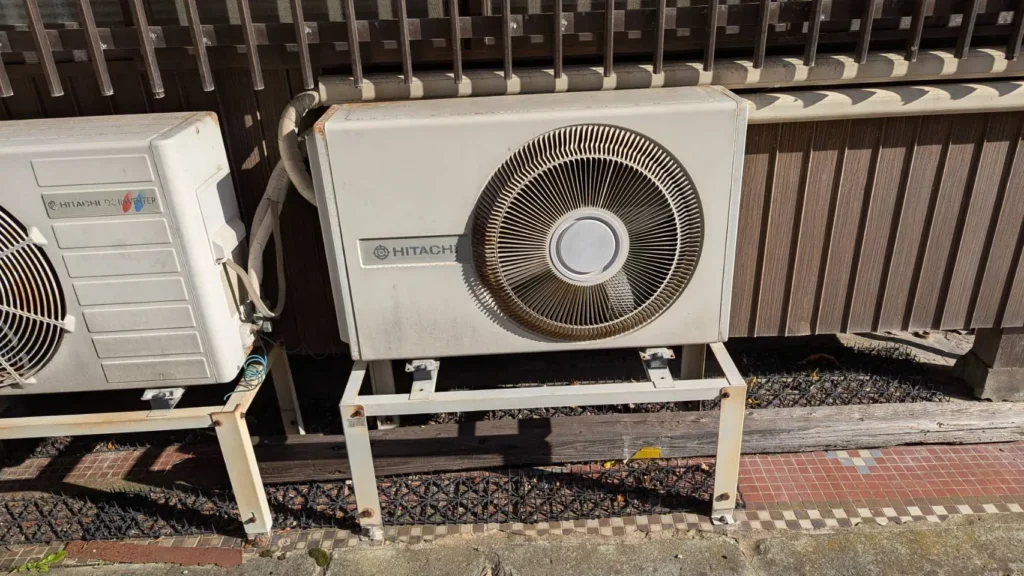
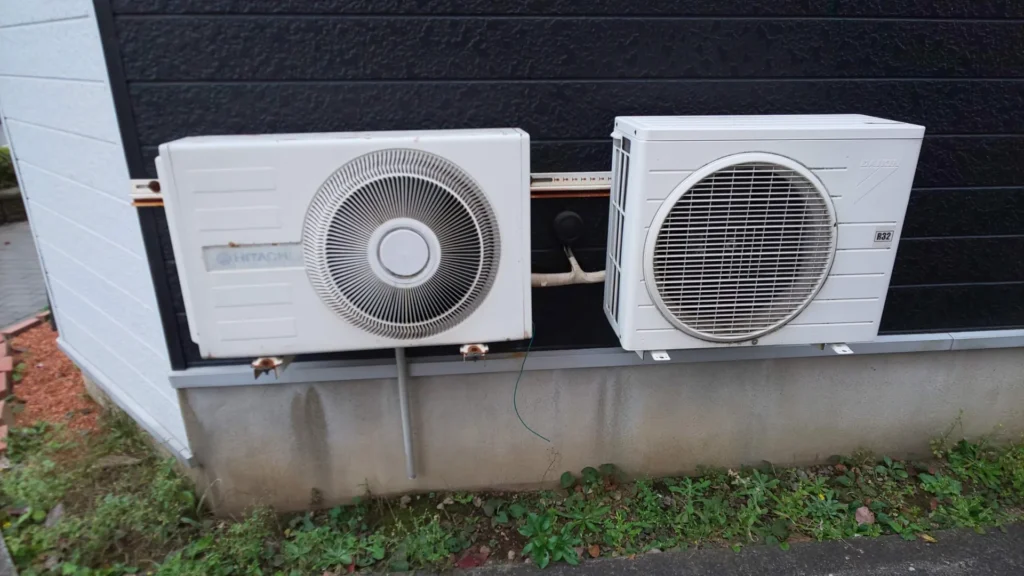
A little more detail (for the curious)
- Why “right-eye”? The name comes from the round fan looking like a single eye. On older designs the fan was placed on the right side of the unit; later designs moved it to the left, which became the standard.
- Why are they so rare now? Air conditioners are usually replaced every 10–15 years, so units from the 1980s are true survivors. Many old units also use an older refrigerant (R22) that is no longer produced in Japan, which makes repairs harder.
- How rare are they? One Japanese street-watcher counted about 1,000 outdoor units and found that only around 1.4% were right-eyes (Daily Portal Z, in Japanese). Finding one really is a little treasure hunt!
- Who made them? You’ll often spot old logos from big Japanese makers like Hitachi.
- Fun way to compare: Next time you see a row of outdoor units, count the left-eyes and right-eyes. A right-eye in the lineup is a lucky find!